

As India’s Operation Sindoor shook it to the core, Pakistan pleaded with the United States for help, even offering more investments, special access and critical minerals in exchange, documents filed under the US Foreign Agents Registration Act (FARA) show.
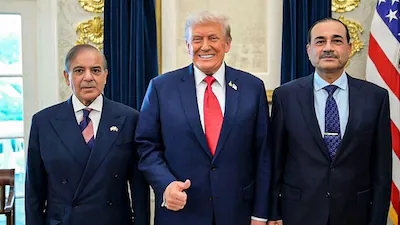 Pakistani diplomats and defence officials reached out more than 50 times over emails, phone calls and in-person meetings to several officials and intermediaries.
The documents were distributed by Squire Patton Boggs (US) on behalf of its foreign principal The Government of the Islamic Republic of Pakistan.
A New York Times’ investigation earlier had highlighted how Pakistan dramatically ramped up its spending on lobbying in April and May.
Operation Sindoor was India’s response to a barbaric Pakistan-sponsored terrorist attack on the tourists in Pahalgam of Kashmir. On the night of May 6 and 7, the Indian Armed Forces struck the terror camps at nine locations in Pakistan. India used a range of high-tech and indigenous systems in Operation Sindoor, including precision-guided missiles, long-range stand-off weapons, AI-enabled intelligence and targeting systems, real-time surveillance from satellites and drones, and an integrated air-defence and counter-drone network to protect Indian airspace.
These technologies enabled accurate, coordinated strikes without crossing the border. India destroyed and severely damaged multiple terror infrastructure sites in Pakistan and Pakistan-occupied Kashmir, including training camps, launch pads, command centres and logistics hubs linked to groups like Jaish-e-Mohammed and Lashkar-e-Taiba, notably at locations such as Bahawalpur, Muridke, Muzaffarabad and Kotli. India’s strikes were focused, intelligence-driven and limited to terrorist targets, avoiding civilian and general military infrastructure, while successfully neutralising key assets used for cross-border terrorism.